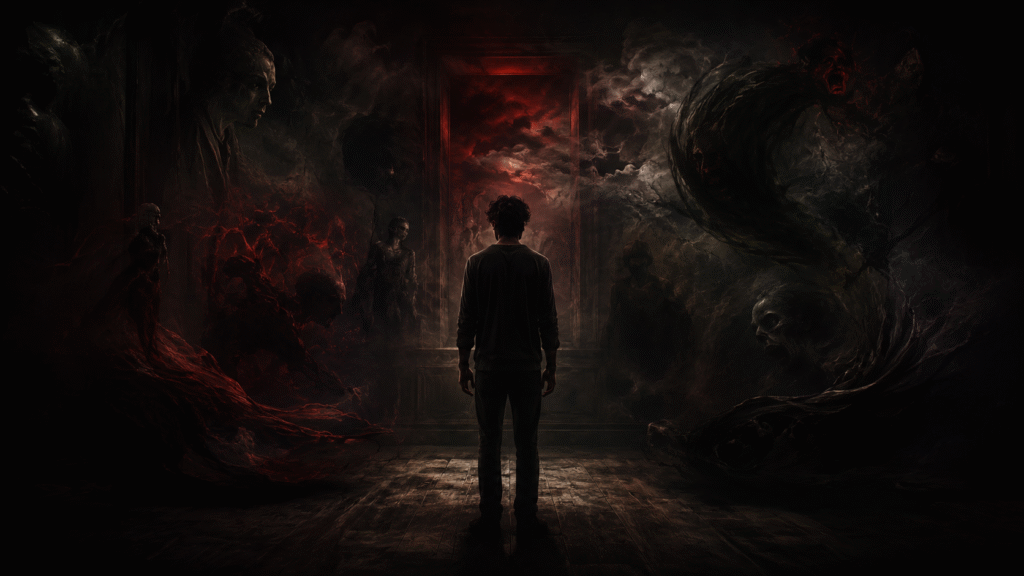
Paranormal experiences are often described as events that should not happen.
A voice in an empty house. A shadow at the end of the hallway. A dream that seems to predict the future. A cold feeling in a room where someone once died. A sense of being watched when nobody is there.
For some people, these moments become proof that something beyond ordinary reality exists.
For others, they are examples of how strange the human mind can be.
But maybe the most interesting answer is not one or the other.
Maybe paranormal experiences are powerful because they happen in the space between the outside world and the inner mind.
We experience reality through perception. We do not see the world directly. We see what the brain builds from light, sound, memory, emotion, expectation, and instinct. Most of the time, this system works well. But sometimes it produces experiences that feel impossible.
That does not mean every strange experience is fake.
It means the mind itself is part of the mystery.
The Brain Looks for Patterns
The human brain is built to find patterns.
Faces in shadows. Voices in noise. Meaning in coincidence. Movement in the corner of the eye.
This ability helped humans survive. If our ancestors heard a sound in the dark, it was safer to assume something might be there than to ignore it. A false alarm was less dangerous than missing a real threat.
That survival instinct still lives inside us.
When we enter a dark hallway, our brain becomes more alert. When we are alone in an old house, small sounds feel louder. When we are afraid, the mind searches harder for signs of danger.
A coat on a chair can become a figure.
A floorboard can become footsteps.
Wind can become a whisper.
A random coincidence can become a message.
This is not stupidity. It is biology.
The brain would rather be wrong and safe than calm and unprepared.
But this pattern-seeking ability also creates the perfect foundation for paranormal experiences.
Fear Changes Perception
Fear does not only change how we feel.
It changes what we notice.
When someone is afraid, the body becomes alert. The heart beats faster. The senses sharpen. The brain scans the environment for threats. Ordinary things become suspicious.
A normal sound becomes meaningful.
A shadow becomes intentional.
A cold breeze becomes a presence.
This is why paranormal stories often happen in certain settings:
Old houses.
Dark rooms.
Hospitals.
Basements.
Forests.
Abandoned buildings.
Places connected to death, grief, or trauma.
The location itself creates expectation.
If someone walks into an abandoned house already believing it may be haunted, the brain is prepared to interpret unclear signals as paranormal.
That does not mean nothing happened.
It means the mind is not neutral.
Expectation shapes experience.
Sleep Paralysis and the Visitor in the Room
One of the strongest links between psychology and the paranormal is sleep paralysis.
Sleep paralysis happens when the mind wakes up while the body remains temporarily unable to move. It can happen while falling asleep or waking up. The person may feel pressure on the chest, hear sounds, sense a presence, or see a figure in the room.
Many people describe the same terrifying elements:
A dark shape standing nearby.
A feeling of being watched.
A weight on the chest.
Whispers or footsteps.
The inability to scream or move.
Different cultures have explained this in different ways: spirits, demons, witches, night visitors, shadow beings, or alien encounters.
Modern science explains sleep paralysis through REM sleep. During dreaming, the body naturally limits movement so we do not act out dreams. Sometimes the mind becomes aware before the body fully exits that state.
But knowing the explanation does not make the experience feel less real.
For the person experiencing it, the figure in the room is not an idea. It is there. The fear is real. The presence feels real.
That is why sleep paralysis sits so close to paranormal belief.
It is a psychological event that feels supernatural.
Memory Is Not a Perfect Recording
Many paranormal experiences become stronger in memory.
A strange sound heard at night may become more detailed over time. A shadow seen for one second may become a clear figure when retold. A coincidence may become more meaningful after later events.
This does not mean people are lying.
Memory is not a video recording. It is reconstructed every time we remember.
The brain fills gaps. It adds emotional meaning. It connects details. It reshapes events based on what we later learn, fear, or believe.
If someone hears a noise in a house and later discovers that someone died there, the memory of the noise may change. It may feel more important, more connected, more intentional.
The past becomes colored by the story we attach to it.
This is one reason paranormal accounts can be difficult to evaluate. The experience may have been real, but memory can transform it.
Still, that transformation is part of why these stories matter.
A paranormal experience is not only about what happened.
It is about what the moment became inside the person who experienced it.
Grief and the Sense of Presence
Many people report strange experiences after losing someone.
They may hear the person’s voice, feel their presence, dream of them vividly, smell their perfume, or see signs that feel too meaningful to dismiss.
Psychologists often describe this as part of grief. The mind is still attached to the person who died. Their voice, habits, and presence remain deeply stored in memory. In moments of sadness or longing, those memories can feel almost external.
This explanation can be comforting to some people and frustrating to others.
Because when someone says, “I felt them in the room,” they are not always asking for a clinical explanation. They are describing a deeply personal moment.
Maybe grief creates the experience.
Or maybe grief makes people more open to noticing something that is usually hidden.
This is where psychology and spirituality often meet.
A skeptic may say the presence comes from memory.
A believer may say love continues after death.
Both are trying to explain the same human experience: the feeling that someone gone is somehow still near.
Coincidence and Meaning
Paranormal experiences often involve coincidence.
You think of someone, and they call.
A clock stops at the time someone died.
A song plays at the perfect emotional moment.
A dream seems connected to something that happens later.
The skeptical explanation is that coincidences happen constantly. Most are forgotten. The meaningful ones stand out because the brain is designed to remember patterns.
That is true.
But some coincidences feel so precise that people cannot easily dismiss them.
The question becomes:
When does coincidence become meaningful?
There may not be a clear answer. Meaning is not only a fact outside us. It is also something the mind creates.
If a sign brings comfort, does it matter whether it came from beyond reality or from the emotional intelligence of the mind?
For some people, yes. For others, no.
But this is why paranormal experiences are so powerful. They turn random life into something that feels personal.
The Role of Environment
Places affect the mind.
A bright, clean room feels different from a dark basement. A crowded street feels different from an empty church. A hospital corridor at night feels different from the same corridor during the day.
Light, temperature, sound, smell, architecture, and history all influence perception.
Low-frequency sounds can create unease. Drafts can cause sudden cold spots. Old buildings make unpredictable noises. Mold, poor ventilation, or certain environmental conditions may affect mood, sleep, and comfort.
Some famous “haunted” feelings may have physical causes.
But again, physical causes do not remove the mystery entirely. They show how sensitive human perception is.
A place does not have to contain a ghost to feel haunted.
Sometimes a place is haunted by atmosphere, memory, architecture, silence, and expectation.
And sometimes, people insist, there is something more.
Why Some People Are More Sensitive
Not everyone reports paranormal experiences.
Some people seem more open to them. They notice small changes, feel atmosphere strongly, remember dreams vividly, or sense emotion in places.
Psychology might describe this as high sensitivity, strong pattern recognition, openness to experience, imagination, anxiety, intuition, or emotional awareness.
Spiritual traditions might describe it as sensitivity to energy, spirits, or unseen realities.
Maybe both languages are describing the same type of person from different angles.
A sensitive person may notice things others ignore. They may also interpret those things more deeply. That can lead to both insight and fear.
The line between intuition and imagination is not always easy to draw.
Why We Need Paranormal Stories
Even skeptics are drawn to paranormal stories.
Why?
Because they speak to questions that ordinary life does not answer.
What happens after death?
Can consciousness exist beyond the body?
Are we ever truly alone?
Can places remember?
Can dreams reveal hidden truths?
Is reality bigger than what we can measure?
Paranormal stories survive because they give shape to these questions.
They allow people to talk about fear, grief, hope, memory, guilt, love, and the unknown. Even when a story turns out to have a normal explanation, the emotional need behind it remains real.
People do not only want proof.
They want meaning.
The Danger of Believing Too Quickly
Curiosity is good.
But belief without caution can be dangerous.
Not every shadow is a spirit. Not every dream is a warning. Not every coincidence is a message. Not every strange feeling means something is watching.
When people believe too quickly, fear can grow. They may avoid normal explanations, ignore mental health, or become trapped in anxiety.
A healthy approach is balanced:
Stay curious.
Look for ordinary causes.
Write down details.
Ask if others experienced the same thing.
Consider stress, sleep, grief, environment, and memory.
Do not let fear make every event supernatural.
Mystery should open the mind, not control it.
The Danger of Dismissing Everything
At the same time, dismissing every strange experience can also be too simple.
Human consciousness is still not fully understood. Memory, dreams, intuition, perception, and emotion remain deeply complex. Science explains a lot, but it does not make human experience feel less mysterious.
Sometimes people experience things that change them.
A dream that arrives at the right moment.
A presence felt during grief.
A place that feels impossibly familiar.
A shadow seen by more than one person.
A voice that says something nobody else knew.
Maybe there is an explanation.
Maybe there is not.
But the experience matters because the person lived it.
The Mystery Is Not Only Outside Us
The psychology behind paranormal experiences does not destroy the mystery.
It deepens it.
Because if the mind can create worlds, presences, warnings, symbols, memories, and fears that feel real, then the mind itself is one of the strangest places in existence.
And if some paranormal experiences are not only created by the mind, then the mind may be the doorway through which we notice them.
Either way, the question remains fascinating.
Are ghosts in the house?
Or are they in memory?
Are shadow figures spirits?
Or are they fear taking shape?
Are signs from the dead real?
Or does love make the world feel connected after loss?
Maybe paranormal experiences are not simple evidence of another world.
Maybe they are where two mysteries meet:
The unknown outside us.
And the unknown within us.