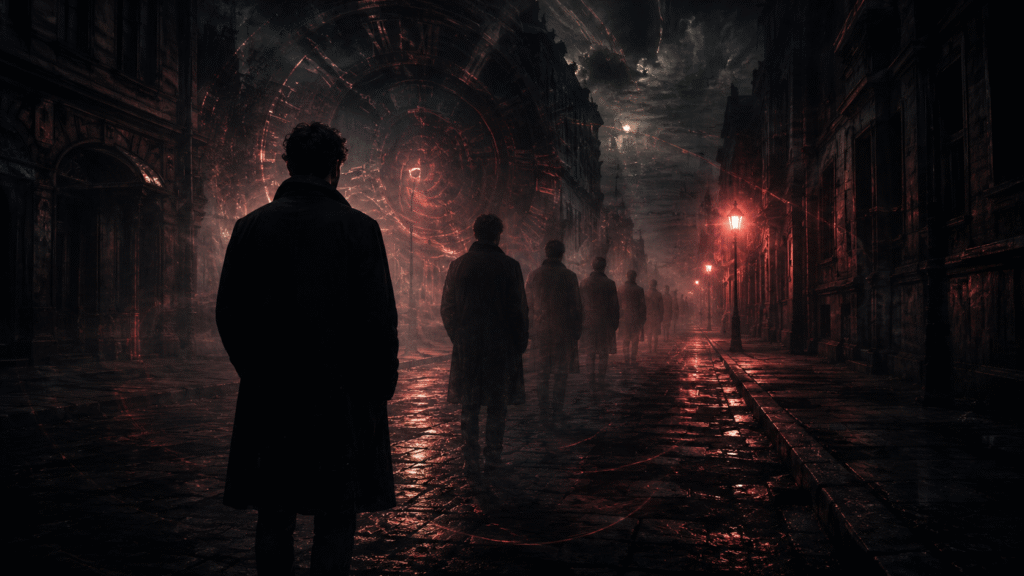
Most people have experienced déjà vu at least once.
You enter a room you have never visited before, but for a few seconds, it feels familiar. A conversation begins, and you suddenly feel like you already know what someone is about to say. You walk down a street in a foreign city, yet something inside you whispers:
I have been here before.
Déjà vu is one of the strangest ordinary experiences in human life.
It is common enough that almost everyone knows the feeling, but mysterious enough that nobody fully agrees on what it means. Science offers several explanations, from memory processing to neurological timing errors. Spiritual traditions offer others: past lives, soul memory, dreams, destiny, or parallel realities touching for a moment.
Maybe déjà vu is nothing more than a small glitch in the brain.
Or maybe it is one of the few moments when we notice that reality is not as simple as it looks.
What Déjà Vu Feels Like
Déjà vu is not just familiarity.
It is a specific kind of impossible familiarity.
When you recognize your own home, your school, your street, or a person you know, that is normal memory. Déjà vu feels different because the mind says two things at the same time:
This is new.
And:
This has already happened.
That contradiction is what makes the experience so strange.
For a few seconds, time feels folded. The present moment feels like a memory. You may even feel that you know what will happen next, even if you cannot explain how.
Some people describe déjà vu as comforting. Others find it unsettling. For some, it passes quickly and means nothing. For others, it becomes a moment they remember for years.
The feeling is brief, but the question it leaves behind can last much longer.
The Scientific Explanation
The most common scientific explanation is that déjà vu is related to memory processing.
The brain is constantly comparing new experiences with stored memories. Most of the time, this process works smoothly. But sometimes, the brain may mistakenly label a new experience as familiar.
In other words, déjà vu might be a memory error.
Some researchers believe it could happen when the brain processes the same moment twice, with a tiny delay between signals. One part of the brain experiences the event normally, while another part registers it as if it has already happened.
That tiny timing mismatch could create the feeling of “I remember this.”
This explanation makes sense. It does not require past lives, hidden dimensions, or time loops. It fits with what we know about perception and memory.
But even if science explains the mechanism, it does not always explain the emotional weight of the experience.
Why do some déjà vu moments feel so meaningful?
Why do certain places feel familiar in ways that go beyond ordinary recognition?
Why do some people feel they have dreamed a moment before it happens?
Those questions keep the mystery alive.
Déjà Vu and Dreams
Many people connect déjà vu with dreams.
They say they once dreamed a place, a face, or a scene, and later experienced it in real life. The moment may not be exact, but it feels close enough to create a shock of recognition.
Skeptics argue that dreams are vague, and the brain is good at connecting unrelated details. After something happens, we may reshape an old dream memory to fit the present.
That is possible.
But some experiences are harder for people to dismiss. A person may dream of a specific room, object, phrase, or event, then encounter it later with surprising detail.
This leads to a strange idea:
What if some dreams are not predictions, but previews?
Not full visions of the future, but fragments of moments the mind somehow touches before they arrive.
There is no solid proof for that. But the connection between dreams and déjà vu is one of the reasons the experience feels larger than a simple brain glitch.
Could Déjà Vu Be Past Life Memory?
For people who believe in reincarnation, déjà vu can feel like a crack in the wall between lives.
A place you have never visited feels like home. A stranger feels familiar. A language, song, or landscape gives you an emotional reaction you cannot explain.
Maybe, some say, the soul remembers what the conscious mind does not.
This idea appears in many spiritual traditions. If consciousness continues beyond one lifetime, then perhaps certain memories do not completely disappear. They may remain as feelings, instincts, fears, talents, attractions, or moments of strange recognition.
A child afraid of water without reason. A person drawn to a country they have never visited. Someone who hears a song from another era and feels grief they cannot explain.
Skeptics would say these are coincidences, psychological patterns, or subconscious associations.
Believers would say they are traces.
Maybe déjà vu is not proof of reincarnation. But it is easy to understand why people connect the two. The feeling itself seems to say:
You have been here before.
The Parallel Reality Theory
Another popular idea is that déjà vu might be connected to parallel realities.
In this theory, there may be other versions of our lives unfolding somewhere beyond our normal awareness. Most of the time, we experience only one path. But in rare moments, two versions overlap.
A conversation feels familiar because another version of you already had it. A place feels known because another version of your life has been there. A choice feels heavy because somewhere, another outcome already happened.
This theory is speculative, but powerful.
It explains why déjà vu can sometimes feel connected to decision-making. Some people report déjà vu before major life changes, accidents, meetings, or emotional turning points.
Maybe the feeling is not memory.
Maybe it is interference.
A signal from another possible timeline touching this one for a second.
Science has not proven anything like this in everyday human experience. But as an idea, it captures something many people feel during déjà vu: the sense that reality is wider than the moment in front of them.
Why Déjà Vu Feels So Important
The strangest thing about déjà vu is not that it happens.
It is that it feels meaningful.
A normal memory mistake should feel random. But déjà vu often arrives with emotion: wonder, fear, nostalgia, sadness, or a sense of destiny.
This emotional charge may come from the brain itself. When the mind cannot explain a moment, it gives the experience importance. Mystery creates meaning.
But maybe there is another reason.
Maybe déjà vu feels important because it interrupts our usual relationship with time. We normally experience life as a line: past, present, future. Déjà vu bends that line. For a few seconds, the present feels like the past, and sometimes even like the future.
That is why it shakes us.
It reminds us that time, memory, and identity are not as stable as we like to believe.
Should We Trust the Feeling?
The honest answer is complicated.
We should not treat every déjà vu moment as supernatural. The brain is powerful, strange, and imperfect. It can create familiarity, false memory, emotional associations, and pattern recognition without any hidden cosmic meaning.
But we also should not ignore the fact that human experience is full of moments that feel deeper than explanation.
A skeptical mind can say:
This is probably memory processing.
An open mind can say:
But why this moment?
Maybe both are useful.
Déjà vu may be a brain event. It may also be a personal signal — not necessarily from another life or another dimension, but from the deeper layers of the mind.
Sometimes the mystery is not outside us.
Sometimes the mystery is the mind itself.
The Moment That Stays With You
Most déjà vu fades quickly.
But some moments stay.
A street you cannot forget.
A sentence you knew before it was spoken.
A face that feels connected to something older than memory.
A place that feels like it belonged to you before you arrived.
Whether déjà vu is neurological, spiritual, psychological, or something stranger, it continues to fascinate us because it touches one of the biggest questions of existence:
Are we only living this moment once?
Or does life echo in ways we do not fully understand?
Maybe déjà vu is nothing more than the brain misfiring.
Maybe it is the mind recognizing a pattern.
Maybe it is a dream returning.
Maybe it is a memory from another life.
Or maybe, for one brief second, reality lets us feel that time is not a straight line after all.